Wednesday, 19 September 2012

Faster Than Light

Vocab needed for this review:  The roguelike is a sub-genre of role-playing video games, characterized by level randomization, permanent death, and turn-based movement.


Faster Than Light is a roguelike spaceship simulator.  It is available on Steam, Good Old Games or from the developer’s own website, and it costs around £6.  It is also really rather good and I am going to tell you why you should buy it.

The game, at first glance, does not look especially complicated.  The graphics are not super-realistic, in fact they remind me of Mech Quest, and that may put some people off.  You will usually see a plan of your own ship, a few statistics about your current progress and supplies, and possibly information you may have about any enemies.  It’s basic but it does the job because, when you’re playing FTL, you’re going to be too busy worrying about putting out fires, repairing vital systems, keeping  your precious crew alive and just revelling in the whole “I AM CAPTAIN KIRK”ness of it all to be worrying about shiny graphics.

The game is very reminiscent of Star Trek, and I mean that in a really, really good way.  To be clear, I mean the original Star Trek too - none of this “exploring outer space by exploring inner space” rubbish that came along with Jean-Luc.  No.  We’re talking missiles, lasers and “the engines cannae take any more cap’n.” Honest to goodness space combat and exploration – exactly as God intended.  There are aliens, teleporters and lots of boldly going where no man has gone before.  It is majestic.  

The aim of the game is to transport some bit of vital information or other to your federation allies whilst avoiding the chasing rebel fleet who gradually move through a sector -  forcing you to stay one step ahead.  Each attempt is randomly generated, so you will never play the same map twice, and encounters are also randomly created, which can lead to some difficult moments as your pitifully underpowered cruiser is put up against a series of tough enemies -  often resulting in an early, fiery death.  Death is also permanent and means a restart back at your hangar. 

There are 8 sectors to conquer before you get to the end of the game.  On each map an exit is marked on the right hand side and you make your own way there by jumping from star to star.  Each jump uses 1 fuel from your limited supplies – although you can get more by destroying ships, or from stores or other events in the game.

Whenever you jump into a new system you are given a text message to tell you what is there, waiting for you.  Sometimes this is nothing but more often than not you will encounter pirates or rebels or one of the many races which inhabit the universe.  This can lead to combat, trading, investigating a space station or one of a whole selection of encounters.  Once you have cleared the problem, or your FTL engine has powered up sufficiently, then you can jump to the next system and so on.  Almost everything apart from combat is done with text, and by selecting options from a menu – and there’s enough variety to keep you going for a long while.


Combat, however, is where FTL really comes into its own.  Each vessel is made up of a number of systems and a hull.  Systems vary from ship to ship but all of them have an engine, weapons, steering and shields.  Some may have a drone control system, or a teleporter; crews require oxygen and a medbay.  All of these are powered by the ship’s energy supply and power can be re-routed to different systems as and when the player requires (although the total amount is finite, if upgradeable.)  Shields protect the ship against various weapons but, once they are breached or knocked down, any damage is taken directly from the hull value and once that runs out then the ship explodes. Systems can also be individually targeted in order to damage or destroy them, and there is a chance (which varies by weapon) that a successful hit will start a catastrophic fire which can hurt both the ship and any crew.  Once systems are damaged sufficiently then they stop performing their function so, for example, if the oxygen supply is destroyed then the oxygen level in the ship will quickly drop, if the weapons are destroyed you can’t fire them etc etc.

Weapons themselves take many forms in FTL.  There are conventional types such as lasers, missiles, beam weapons and ion guns (which disable systems without doing any damage), but there are also drones available which can repair damage, attack the enemy or defend you from incoming fire.  Some ships even have access to teleporters which can send over crew members to attack enemies in their own backyard.  The game gives you a wide variety of ways to kill aliens, with different approaches needed for different problems.  For example missiles can get through shields easily, but a defence drone will instantly make them obsolete.  This means that you need to tailor your attack to give yourself the best chance of winning - you can't just turn up with one great weapon and always win.

Crew are present on most vessels.  They can come from a variety of races (all with their own advantages and disadvantages) and they are vital to the running of your ship.  Usually they will be assigned to a specific station (such as shields, engines, steering or weapons) and their presence improves the functioning of each of those.  They can repair damage, put out fires, fight intruders or board an opponent’s craft in order to cause them some problems of their own.  Each crew member has their own health, which can be depleted by fighting, fires and lack of oxygen.  Once that runs out then they die, but they can heal by going to your medbay.

Combat is played out in real time, although the player can pause the action in order to think about what to do next (or, more likely, try to think of a way out of the mess they’re in) and this makes it an intense, exhilarating experience.  The beauty of it is that you are constantly trying to manage everything.  Will your shields hold out?  When does your powerful missile battery reload?  Will your crew member put out that fire before they die?  And what the hell just happened to your engines?  Battles can ebb and flow, it’s very rare that one side completely overpowers the other.  You often come away from a defeat thinking “If I’d only done THAT, then maybe it would have ended differently”, and this is a good thing.  This is a sign of a great game.  Combat is tough, it is difficult and you will die many, many times but the game gives you plenty of opportunities to try new things.


The game also has its own economic system, with "scrap" as the currency.  There are many ways to get this.  Sometimes you are given it by a friendly soul, but more likely you take it from defeated enemies, and you can use it to upgrade your ship or to trade at stations.  You can upgrade pretty much any part of your vessel, except for the hull.  Invest in engines and you will avoid more incoming fire.  Invest in shields and they will take more damage before leaving you vulnerable.  Increase your power supply and you can run more systems...  you get the idea.  You can also buy augmentations such as a hull repair arm, or improved scrap retrieval – all with their own effects and advantages.

And, not only can you upgrade your ship, but your crew also become more experienced as they do their jobs.  If they fight off invaders they get better at fighting, and if they fix systems their repair ability increases.  This means that, as you progress, your ship becomes more efficient and more able to face the increasingly difficult opposition later in the game.  However, it also means that your crew become even more valuable than they were before, which adds yet another layer to the real-time combat as you need to keep them safe and alive if you want to succeed.

If you add in that there are 9 different unlockable ships available (each with an alternate loadout once certain conditions are met), that different sectors can be controlled by different races with differing levels of hostility to the player and that missiles and drones are also strictly rationed then we can see that a game which looks so simple on the face of it is actually remarkably complex and requires some definite strategic thought if players want to get anywhere.

And this is where FTL really excels.  It forces the  player to make constant strategic choices.  Do I run or fight?  Do I help them or not?  Is that ship too powerful for me to beat?  Do I spend my missiles on this opponent or save them for later?  Where can I get more fuel from?  This is a proper game which makes the player plan ahead, but also makes them react to what is happening right now.  Juggling everything during a particularly even firefight is absorbing, and balancing attack and defence is vital.  It rewards exploration but also instils a genuine fear and nervousness in the player of what might be lying in wait in the next system.  The difficulty of it is so well-balanced, and the randomness and permadeath work so well, that each run through is new and exciting and the urge to have “just one more game” is almost overwhelming.

FTL is a great game.  It’s not flashy.  It’s not something that needs massive amounts of hard drive space and it’s not something that prioritises showy set pieces over gameplay. Unlike some other, more illustrious, offerings it understands what games are all about.  It presents the player with a challenge.  It forces them to make choices.  It makes them play a bloody game.  It is a wondrous, beautiful creation and I would urge you to spend £6 on it.  It’s one of the best things I have played all year.

Wednesday, 5 September 2012

Greenlight


You've probably heard of Steam.  It's Valve's digital content delivery system and it has taken over the PC gaming market, quickly becoming the largest gaming download "portal" in the world.  There are lots of reasons for this - the legendary Steam sales where they sell off everything for low, low prices, the perception of Valve themselves as "one of the good guys" and probably lots of other reasons which people in marketing would be happy to talk about for hours and hours.

But that isn't really important.  What's important is that Steam recently announced "Greenlight" - a new way for people to get their games into what is, essentially, a massively lucrative marketplace.  Developers could submit their creations and Steam users voted on which ones they thought were worthy of being put onto the main site.  Finally Indie developers had a way of hitting the big time - if they could get their games through the selection process.

Now, anybody who knows anything about the human condition can probably guess what happened next.  Overload.  A sea of dross in which anything worthwhile was lost.  Obviously this wasn't Steam's intention, but it was pretty predictable.

So, Steam have tried to clean things up.   Each developer is now asked to pay $100 (about £60) as a one-off fee, with all proceeds going to the Child's Play charity.  That's a one-off fee and it allows people to submit and edit all their current and future games once they have paid it.  Steam say this will cut out the timewasters.

And this has caused uproar.

Accusations of class divides, references to "the money middle-class people have" and lots of people saying that they flat out cannot afford to pay the fee and that this means that the game that they have put hundreds of hours into is worthless.

There is certainly an element of truth to this.  University fees make university education less likely for children from poor backgrounds, they perpetuate the gap between rich and poor and make that harder to overcome.  This is similar isn't it?  This means that rich people can still access something which has the potential to make them even better off, whilst the truly poor are excluded.  No matter if the fee is £60 or £9000, the principle is the same.

And Valve could have achieved their aim through different methods.  A lower fee (although this would fall foul of the same principle), an admissions panel (but who watches the watchmen, and this goes against the whole point of Greenlight), an easier way of viewing submissions (now implemented) or a cut off where the game is removed if it receives an overwhelmingly negative reaction.

However, not being able to afford to register with Steam does not mean that all is lost.  Greenlight is less than a week old.  Indie developers were able to sell their games before it came along.  None of those options are now closed.  Everything else is still the same.  If I was developing an Indie game that I had faith in, that I loved and that I had sacrificed a lot of time and effort to develop then I would try to sell enough copies of my game (typically less than ten) in order to afford the submission fee to something which has the potential to expose my work to about 40 million people.

People make the point that it's a gamble.  That you're not paying to get on to Steam itself, but to have the chance to be voted on to Steam.  OK.  But you're also paying for the chance to have anything you make in the future also get on to Steam.  What's marketing if it isn't a gamble?  How do you expect to sell something if people don't even know about it?  And how do you get that word out there without spending some money?  (The answer is that I'll promote it on here if you contact me, but I don't have an audience of 40 million.  Do it anyway.  Can't hurt.)

Ultimately Steam gives small developers the chance to make it big.  To sell enough and make enough money not to have to worry about $100 fees again.  The cost vs. reward equation seems pretty clear here.  Maybe it's time that people stopped wishing things were the way they want them to be and faced up to the way they are?


Monday, 6 August 2012

What Is Up With Skyrim?

Game:  Noun:  A form of play or sport, esp. a competitive one played according to 
                            rules and decided by skill, strength or luck.


Let's talk about Skyrim. 

I think that enough time has passed, the hype has died down and people are finally in a place where they can maybe, just maybe, start dealing with some truth.

Skyrim is rubbish.

It is.  Really, it is.  It isn't even a game, it's a gratification engine.  A really poorly designed, horrible, repetitive, dull gratification engine (with too many loading screens) at that.  This isn't an attack, this is just a statement of fact.  I mean, I'm not a monster, I accept that there are some good points about it - it's just that they are overwhelmed, suffocated and submerged beneath a tidal wave of tedium.
Not singing about Skyrim

Let's take the good points first.  It is a very, very good walking simulator... well, unless you want to actually get anywhere.  If you want to wander around in the snow then you're set.  The scenery is lovely, the music is nice and it can be very calming and meditative to watch the northern lights playing out over a distant mountain top while you decide what to kill next.  However, if you want to get to a specific point on the map then prepare yourself for frustration.  When Marvin Gaye sang "there ain't no mountain high enough" then he obviously was not playing Skyrim.  In Skyrim plenty of mountains are high enough, plenty of ravines are low enough and plenty of waterfalls are smashy, smashy, drowny enough to keep you from getting anywhere - let alone to any kind of baby.

Skyrim is also a very, very good work simulator.  At least that's what I assume the crafting is for.  The mind numbing tedium required to get your smithing skill to 100 really is something to behold.  Hours and hours of running backwards and forwards to different shops (with a loading screen at each door) to collect the materials necessary to make a generic suit of armour, before running to the anvil to make it, then to the workbench to upgrade it and then to the merchant to sell it (usually at a loss, and with the attendant loading screens).  Do this 20 times and... "your smithing skill has raised to 16".  16!  This is supposed to be a break from work!  This is supposed to be what I do to bloody unwind!  Skyrim is the first game when I actually looked forward to stopping playing it so that I could go and relax in the office.  No matter how tedious, boring or soul-destroyingly awful your job is, it apparently has nothing on the life of a pseudo-viking blacksmith.  
Looks exciting, doesn't it?

Skyrim also does away with things like attribute scores and classes - things that are traditionally an integral part of character definition within any role playing game.  Bethesda have their reasons for doing this, and they lead us towards answering why Skyrim is such a bad game.  Bethesda say that they don't want to limit the player in their choices, they want people to be able to change their minds mid-play and alter their character without having to start again.  They want the player to be in control throughout rather than be restricted by a choice they made before they had even played the game, and they want to streamline the experience so that players are able to just play without worrying too much about numbers.  Casting aside my nerdy prejudices, I can accept that these might be things that appeal to some people - silly people, people who don't enjoy actually playing games but still, you know, people.  Freedom and flexibility are usually good things in life and it follows that they would be good things in a game, but the problem is - they aren't.

Let's start with classes and attributes.  Traditionally they are there to define your character, and to encourage you to play in a certain way.  As it is there is nothing when you begin Skyrim to set aside a hulking orc from a frail old dark elf, except for some small differences in skills.  They can carry the same amount, they have the same health, their spells do the same damage, and so on.  The player can take any approach with them and can focus on exactly the same things - with no care about their physical or mental capabilities.  On the one hand this is freedom, but on the other it's a tyranny of conformity.  I want my character to be special, I want to determine who they are and how they differ to others.  I want to have to think about how to solve problems.  I want to be forced to approach things in different ways.  Essentially I want to be made to play a role (this is, after all, supposed to be a role-playing game).  By removing the very things which define them Bethesda have turned your character into a featureless, generic actor.  It takes away the whole point, and this obsession with removing restrictions in order to allow the player to do anything they want causes lots of other problems.
Don't worry, he's not as quick as he looks

Skyrim breaks basic balancing restrictions that have been in place in RPGs since they began.  There's a reason why mages aren't able to use heavy armour.  Usually this is given as some gubbins involving "energies" but it comes down to game balancing.  Somebody who is able to destroy vast areas of the world needs taking down a peg or two.  You've got to give them some kind of vulnerability.  Fighters can't cast spells and archers are bad in melee for exactly the same reason.  Guess what?  Skyrim gets rid of this.  If you want to be a walking tank in heavy armour, shooting flames out of both hands then you go for it!  There is absolutely nothing in the game to stop you, or even encourage you not to do this.  Limiting you in any way is a complete anathema.  The problem with this, though, is that it makes the game dull.  Dull, dull, dull.  What's the point of playing if you just crisp anything in seconds?  Nothing can hurt you.  What's the bloody point?

And this even affects things like the interface.  Lots of people have criticised the interface in Skyrim, but the main problem for me is the sheer volume of items it has to deal with.  As you experience the brilliance of the walking simulator you seemingly cannot help but pick up items, shouts, spells, potions and quests and, in keeping with what we have talked about before, none of them are unusable by your character.  After a few hours the number of options available to you has increased alarmingly.  No matter how much you try to keep your favourites list down, by the end you are scrolling through endless permutations to try and find the one you want.  It's clunky and annoying but only because of the cloying, overpowering choice.
We're up to B!

Having restrictions is good.  If you have limitations placed on your character's abilities then it forces you to approach the game in different ways.  It makes you think about how to overcome things.  It makes you put in a bit of bloody effort.  Skyrim is so dull because there is nothing to stop you doing exactly whatever you want.  It is so eager to give you everything that it forgets that the most important thing is to provide some resistance, something for the player to overcome.  It doesn't really do that.  I mean, yeah, there are enemies, and sometimes those enemies can kill you, but there isn't really any structural reason why you can't have everything.  The game is so determined to allow you to do anything, and shower you with gifts, powers and exalted ranks while you do it, that it just ends up as a bit of a mess.

Want to be the head of the Thieves' Guild?  Sure!  Off you go.  Complete a few quests and there you are.  Now.. want to also be the head of the Companions?  No problem!  You can do that.  Decided to do the Mage's Guild questline?  Fine!  This is all perfectly OK.  Fancy being Thane of a few towns?  There are no restrictions.  Nobody bats an eyelid.  Nobody's worried that you might be stretching your time quite thinly and nobody forces you to make any choices.  Anything is OK and everything is OK.  For a game that prides itself on its "immersion" it seems strange that you can be running everything in Skyrim without anybody seeming to notice.  

No choices you make actually affect anything else.  Nothing is ever closed off.  Nothing is ever restricted.  Nothing you do ever actually means anything.  There are no consequences to any of your actions and you are certainly never, ever going to fail at anything.  Heaven forbid.  If you want to achieve anything then you can do it, because the game won't let you mess it up. Quest arcs become processions.  The things you are asked to do might change, but the process is the same.  Follow the arrow.  Do what you are asked to do (usually killing something, or collecting something, or talking to somebody) and then return to get your reward.  Then do it all again.  Once you decide that you want to achieve something then all you need to do is put in a bit of time and bang, there it is.  There's no uncertainty, no challenge and no failure.  Follow the arrow; talk, kill or collect and go back.  Over and over again.  It's mind numbing.

And this is the answer.  This is what is up with Skyrim.  There is nothing to stop you doing whatever you want.  And, if there is nothing to stop you, then where does the achievement come from?  Where does the excitement come from?  This is why I said at the start that Skyrim is not a game.  According to the definition at the top of this article a game is decided by skill, strength or luck.  You don't need any of these to succeed at Skyrim.  You just need to put in some time.


Friday, 6 July 2012

Dark Souls - Reprise


I've gone back to Dark Souls.  This isn't really a surprise.  Ever since I bought it the game has been a constant distraction.  It's seen off plenty of honest-to-goodness blockbusters during that time; including Skyrim, Battlefield 3, something that I think had Batman in it and most recently Dragon's Dogma.  These other, inferior, games have occupied my spare time for short bursts here and there - but Dark Souls has always been waiting in the background for me to come to my senses and return to its unforgiving arms.

I've got some idea as to why that is and I've already detailed what makes the game different to so many other things on the market.  Even so, this is quite something here.  For a game to occupy that space for 9 months is unheard of.  I'm beginning to worry that this is a sign of a creeping problem, that I'm going to end up unable to leave the house - sitting here endlessly doing the run through Undead Burg until I finish it without getting hit and parrying every single opponent.  Because the game is just so deep.  There is so much to it.  It's hard to stop.

My current project is to go through the entire game without advancing in level.  This is a response, really, an attempt to re-capture that crushing difficulty which made the first play through so amazing.  It reminds me of eating chilli or something - there's a reaction to the pain.  Maybe endorphins are released, God knows what it is, but it's making me try to make this hard game even harder.  To be honest, I'd kind of forgotten how difficult it really is.  And the brilliant thing about it is that it's made me start thinking again about how I can maximise every advantage.

Because once you've finished the game once it gets (kind of) easy.  You know where stuff is and you know how the weapon improvement thing works and you can use this knowledge to make things a lot more manageable.  And not only do you know this, but so do most other people - so when you summon them they're also totally tooled up supermen and off you go merrily laying waste to enemies that were once the bane of your very lives.  Now this is fun, sure, but it's not quite the same as it was way back when.  So I started trying to recapture how it was the first time.  When I did NG+ I decided to do it only using Black Knight equipment.  Now, to be entirely honest, this is hardly a massive hindrance.  Black Knights have good armour and very big, hurty, stabby axes and swords and things; so it's all good.  The only problem I had was in the catacombs.  Down there you need Divine weapons - and I couldn't use them.  So I spent a lot of time kicking skeletons off bridges and making suicide attacks on fellas with lanterns in their beards.

Anyway, that was then.  This is now.  As a starting level character I have a pitiful amount of health.  I also (stupidly) picked a character with 9 strength.  This means I can't use any straight sword, and only one metal shield.  I am an idiot.  If any of you are thinking of following in my footsteps then DON'T PICK THE THIEF, that's all I'm going to say.  But!  This has made me think about how to overcome the (huge, slobbering) obstacles in my path and has inspired me to give the following tips to anybody who might fancy doing the same....

1.  I said this just now but... DON'T PICK THE BLOODY THIEF!!!  Pick the Knight or, even better, pick a weapon you might want to use and pick the character that can use it.
2.  Poison.  Poison.  Poison.  Lovely, useful poison.  This is your greatest friend and companion.  Three arrows will take down a Royal Sentinel (the big guys in the hall in Anor Londo.)  Two arrows will kill most other things.  Poisoned throwing knives, dung pies - whatever.  Use them and use them often.
3.  Pyromancy doesn't have any statistic requirements.  I'm just going to say that.
4.  Pick your weapons.  There is no point using anything other than fire, chaos fire or lightning.  And divine, obviously, for the catacombs.
5.  Pick your equipment carefully.  Most armour can be improved to +10, special stuff to +5 and things like the gold-hemmed set, not at all.  Bear in mind that some items can look bad to start with, but really reward you if you max them out.
6. Your maximum equip load will only ever be increased by items, so stick to light armour if you want to be mobile.

7.   A heater shield, available from the Male Undead Merchant, has the lowest strength requirement for any shield which stops 100% of physical damage. 
8.  Practice your technique.  Going toe to toe is not advisable.  Dodge.  A lot.  Parry.  Not only does it mean you don't have to spend ages dancing about, it is also monumentally cool.  You will feel like some kind of Dark Souls god.
9. Don't feel like you have to do everything.  Your aim is to beat the game.  You don't have to kill everyone to do so.
10. You will not be able to summon anybody, or be summoned, much past Undead Parish.  Save your humanity so that you can summon Solaire for Ornstein and Smough - you'll need him.

Finally, there will be times when you wonder why you are doing this.  You are doing this for the same reason that Edmund Hillary conquered Everest; so that, like him, you can say  "Well, George, we knocked the bastard off."  Assuming, of course, that you know someone called George.

Tuesday, 29 May 2012

Torchlight 2 Preview

This is turning out to be a good year for fans of clicky, killy, looty, dungeon crawling games.  Diablo III was released a few weeks ago (to equal parts acclaim and gnashing of teeth), Path of Exile is coming along nicely, and Runic Games are releasing the follow up to their surprise 2009 hit Torchlight “this summer.”  Recently Runic invited people to take part in a beta testing weekend and we jumped at the chance to get our hands on the game and put it through its paces.

In action RPGs like this the player explores a series of randomly generated dungeons (or outdoor areas), battling monsters and collecting loot.  There is usually a story about some great evil or other but the important bits are fighting, levelling up and collecting the lovely, shiny valuables that litter the ground.  Action plays out in real time and the player is controlled with a click of the mouse to make them move or attack enemies and hotkeys to select which skills to use, potions to drink etc.  The plentiful treasure is mostly randomly generated and weapons and armour can be common, magical, rare or unique - with each category denoted by a different colour.

Loot, glorious loot

The temptation here is to compare Torchlight II to Diablo III - not only because they are being released so close together but also because the Runic team includes people who worked on the first two Diablo games.  However, I don’t really want to do that as I think that this game deserves to be treated on its own merits and, probably more pertinently, I wouldn’t be able to anyway as my experience of Diablo only extends as far as the recent beta.  All I will say is that it will be possible to play Torchlight II in single player mode without any internet connection, you can choose different difficulty settings from the start, there will be no real money auction house, it will cost £15 / $20 to buy and I had no problems logging in at any point in the whole process.  

The boys are back in town

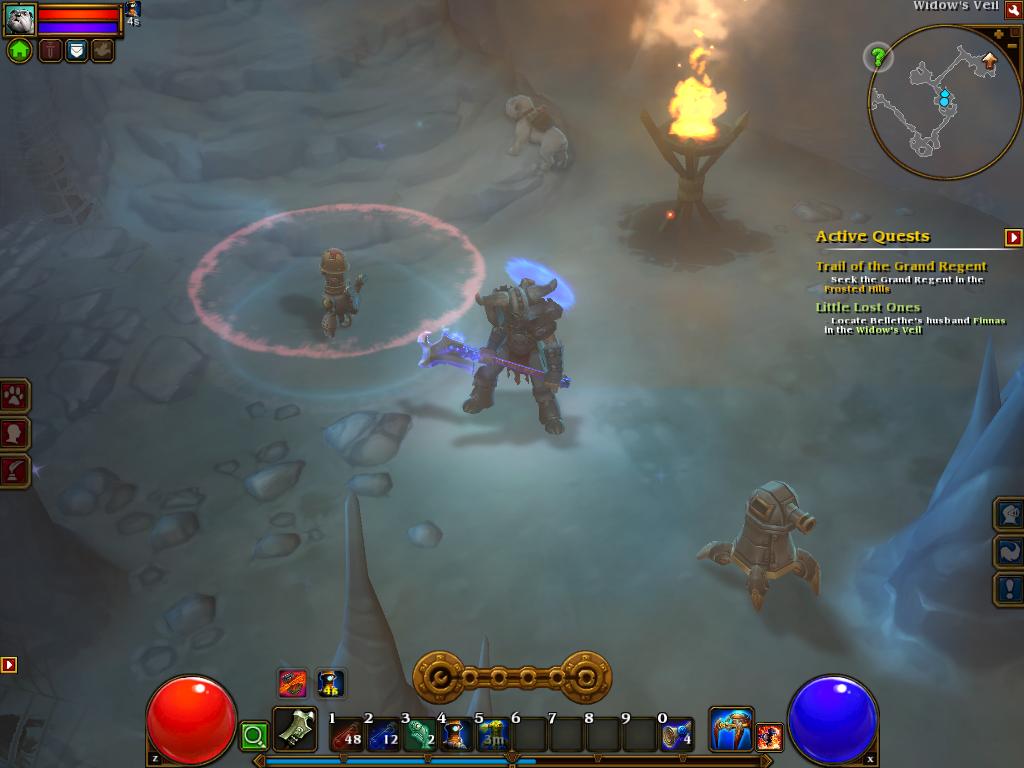
So, that said, what’s Torchlight II actually like?  Well, it takes everything from the first Torchlight game and does what a sequel should do.  It makes it bigger and better.  To start with there are now more, completely different, classes.  Players can take their pick from Embermage, Outlander, Engineer or Berserker – all with differing skills and options.  I didn’t have time to complete the beta with all four classes but I did with the Engineer, and the class can take a number of different paths, from tank to summoner to melee specialist.  By the end of my playthrough I had a small robot army following me about, with a healing bot, a gunbot and some extremely useful suicidal spider mines which threw themselves at any visible enemy before exploding.  Great stuff.

Ah, look at his little face!

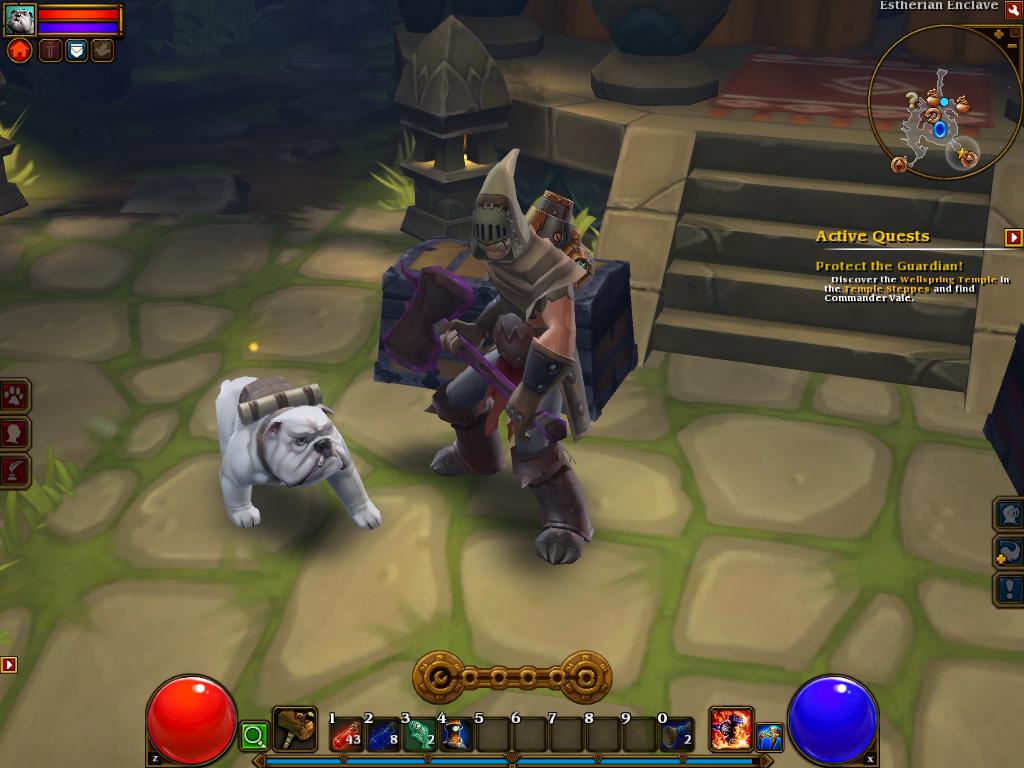
And, of course, you have a man’s (or woman’s) best friend - your pet.  You can choose your companion from lots of different animal types, ranging from a mundane cat or dog to a quite odd velociraptor / cassowary mix, called a chakawary; and with panthers, wolves, hawks and ferrets also available there really is a pet to suit everybody.  You will soon come to rely completely on them.  They are good in a scrap - often better than your main character and you can give them special pet equipment to protect them and enhance their abilities even further.  They can cast spells for you (there is no finer sight in the world than a dog summoning some zombies to lend a decaying hand) or carry all your excess goodies and take them back to town to sell them - which enables you to stay out in the field for longer.  You can even give them a shopping list of items to buy in town.  Run out of identify scrolls or healing potions?  Tell Fido to stop off at the shop and get you some!  “What’s that Lassie?  They’re stuck down a mine and they need four... no, five healing potions?” “Woof!”

Ah yes, my favourite holiday destination

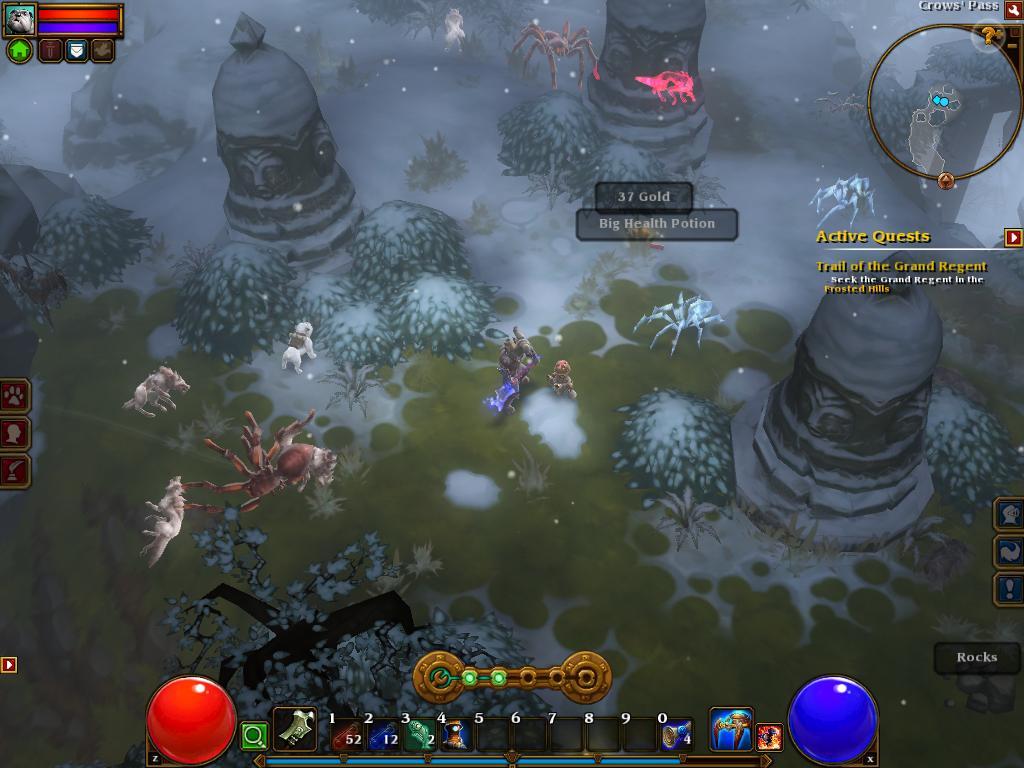
Players are also no longer confined to Torchlight itself.  The action is much more expansive and takes place over a much wider area - including (gasp) the outdoors.  This makes a nice change from the original game’s often quite claustrophobic tunnels and gives a much greater sense of exploring and travelling to specific destinations, rather than just getting to the next set of stairs going down. The beta offered a number of different, and quite distinct, areas to explore, from steppes to mountain passes, and the full game will offer many more.  Some of the areas are really quite large and contain a number of sub-quests and side missions which you can complete before getting on with your main task.  They can also include some special randomised locations, such as abandoned altars, which provide rewards when conquered.

Multiplayer has also been added, and this is the mode that was being tested during the beta weekend.  It works in pretty standard fashion, with players able to join games that others have set up or set up their own.  You can protect them with passwords and set it so that only your friends can join, or you can join in with a bunch of strangers and run around killing things together.  Loot is discrete, in that each player will receive their own stash, and enemy difficulty scales according to how many players are in the area.  This all ran very smoothly during the test, with little lag or other problems.  As other games have shown, this may change when the game is actually released - but so far, so good.

Great.  Spiders.

Ultimately what Torchlight II does is boil gaming down to its essence.  It provides you with an endless, relentless stream of enemies to kill and rewards to gather – all just by clicking the mouse.  There is something almost primeval about it, it appeals to that bit of the brain we share with lizards.  Every few seconds you progress in some way - whether it’s a new weapon, another level or just some gold, and everything increases exponentially the further you get.  Your damage goes up, your level goes up, you get more powerful, the monsters get harder, the weapons get better and it keeps going up and up and up in an unending addictive spiral of death, destruction and cute (but vicious) animals.  The great achievement here is that, despite it being simple, Runic manage to make this so much fun that you forget what it is you’re actually doing and instead become focused on getting to the next skill, the next level or the next weapon.  Torchlight II is a blast to play.  Runic have another hit on their hands.

Wednesday, 9 May 2012

Xenonauts - Kickstarter

We recently said that you should keep a beady little eye on X-Com re-make Xenonauts.  Well, we have some good news for you - it’s now on Kickstarter  and there’s a demo.


Xenonauts is a re-make of the 1993 classic X-Com: UFO Defense (known here as UFO: Enemy Unknown), in which players take charge of an elite anti-alien force and defend the world from invasion.  Despite being almost 20 years old X-Com is regularly voted as one of the greatest games ever made and it has spawned a number of imitators - none of which have managed to capture that certain something which made the original so brilliant.  

Xenonauts is the latest game to attempt to do this and it has been in production for a couple of years. The developers, Goldhawk Interactive, have decided to use fashionable funding source Kickstarter to get the money necessary to finish the game properly.  They have already raised $75,000 and have released a demo to help convince people to support them.


Kickstarter is becoming an increasingly crowded marketplace, with lots of projects all vying for your attention, so what’s the game actually like?  Well... I have played it and my considered opinion is as follows.

Firstly, let me say that I don’t love Xenonauts.  I am IN LOVE with Xenonauts.  I want to take it home and do unspeakable things to it.  I want to hold it and tell it that everything will be OK.  I want it to have my children.  I want to cherish it and keep it safe for all time.  Am I making myself quite clear?  Ever since UFO: Enemy Unknown was first released I have yearned for and dreamed of a proper re-make.  Something that does full justice to the brilliance of the original.  I am pleased to tell you that this is it.  Finally.  All those years of heartache, all those pretenders to the throne, all those false dawns - they’re over.  That longed for day has finally arrived.

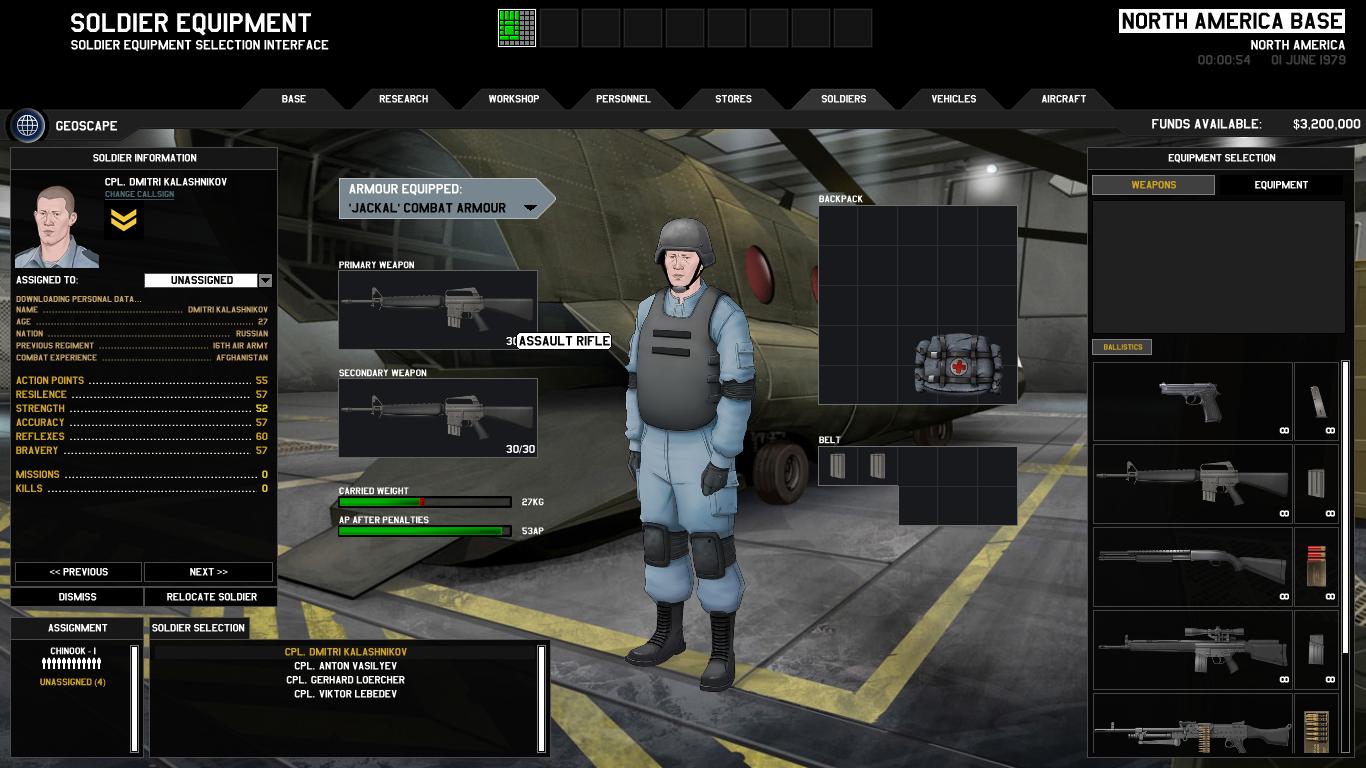
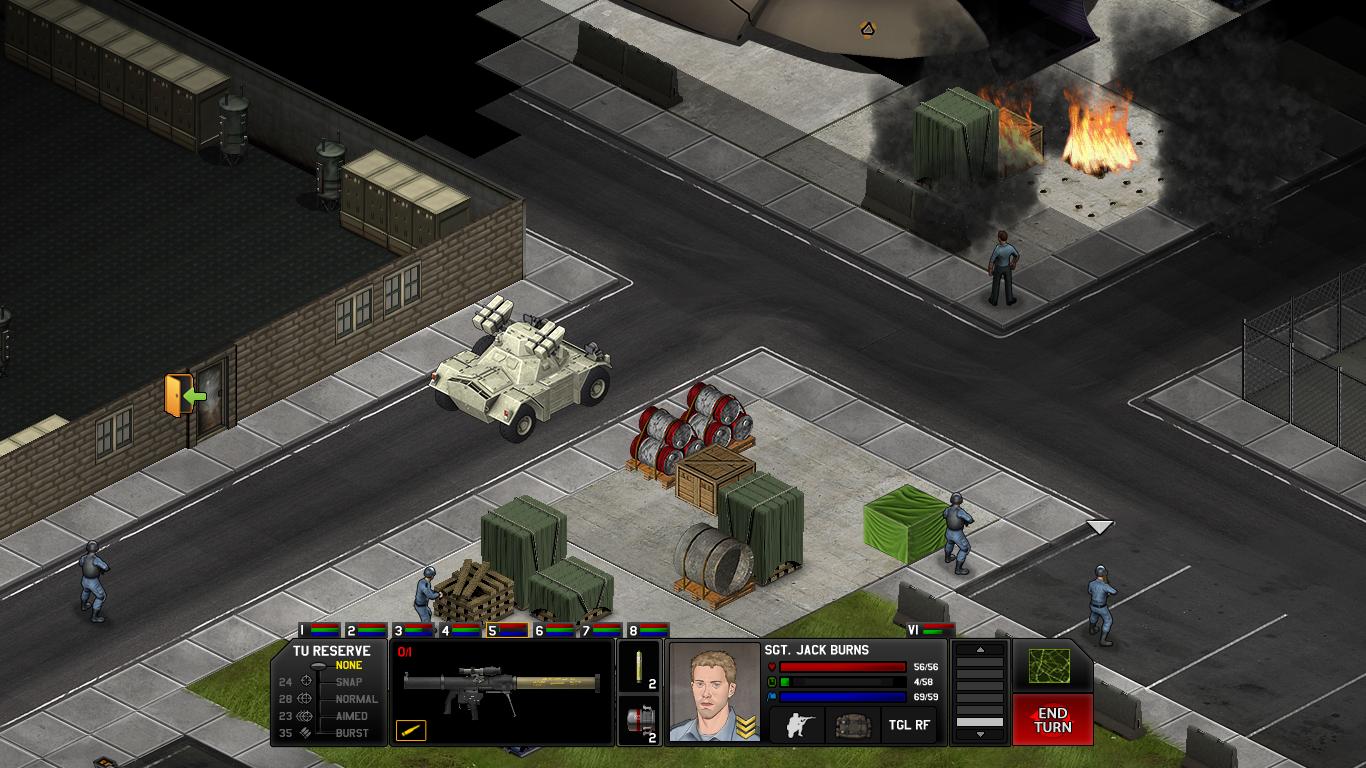
Because Xenonauts doesn’t just slavishly copy what has gone before - it takes it, gives it a slap around the chops and drags it kicking and screaming into the 21st century.  Not only have the graphics had a complete rework (and the hand drawn interface screens in particular look lovely), but everything has been re-designed and streamlined.  A lot of the micro-management has been removed.  There’s no more ordering missiles or running out of rifle ammo - you have an infinite supply, which arrives automatically.  You can rename your troops and view them in order of strength, accuracy or any statistic you like.  You give them their guns in base, with their attributes clearly visible on the same screen.  When you move your troops in battle it tells you how many action points will be left.  Your landing craft even have more than one door!  Goldhawk have obviously gone through X-Com and fixed every single minor irritation that it contained - and that bodes very well for the finished game.

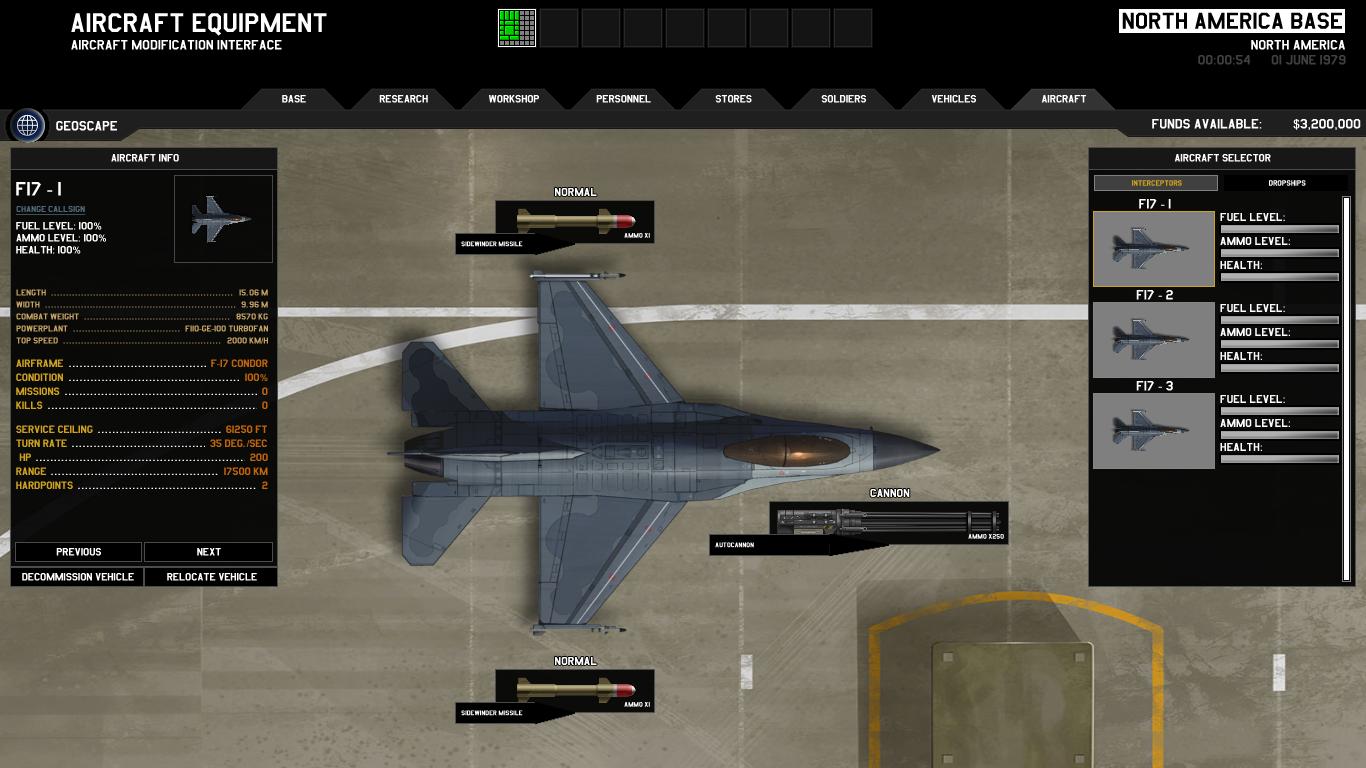
And, as well as the small things, a number of more crucial aspects have also been changed.  For example, the interception process has been completely revamped.  You now control individual fighters, with different characteristics and weaponry - and you can even combine them into a squadron to take down the more difficult enemies.  You direct these fighters on a two-dimensional screen to outflank their targets, and gain missile lock whilst avoiding return fire.  Even within the confines of the demo it is clear that different UFOs will pose different levels of challenge - with fighters proving more difficult to destroy than scouts and the whole experience is much more interactive than in the original game.


So Xenonauts has kept what is great, tweaked what is out of date and completely changed what it thinks needs to be changed.  And the important thing is that all of these choices and decisions have, so far, been spot on.  It really is looking like this is finally the game that we’ve all been waiting for.

But don’t take my word for it.  Please don’t.  Go and play the demo.  It’s a bit buggy, yes, it is an alpha after all - but if you liked X-Com or if you have any kind of beautiful soul burning bright within you then play this game.  It is quite simply wonderful and I can’t wait for it to be finished.

Tuesday, 8 May 2012

Warlock: Master of the Arcane


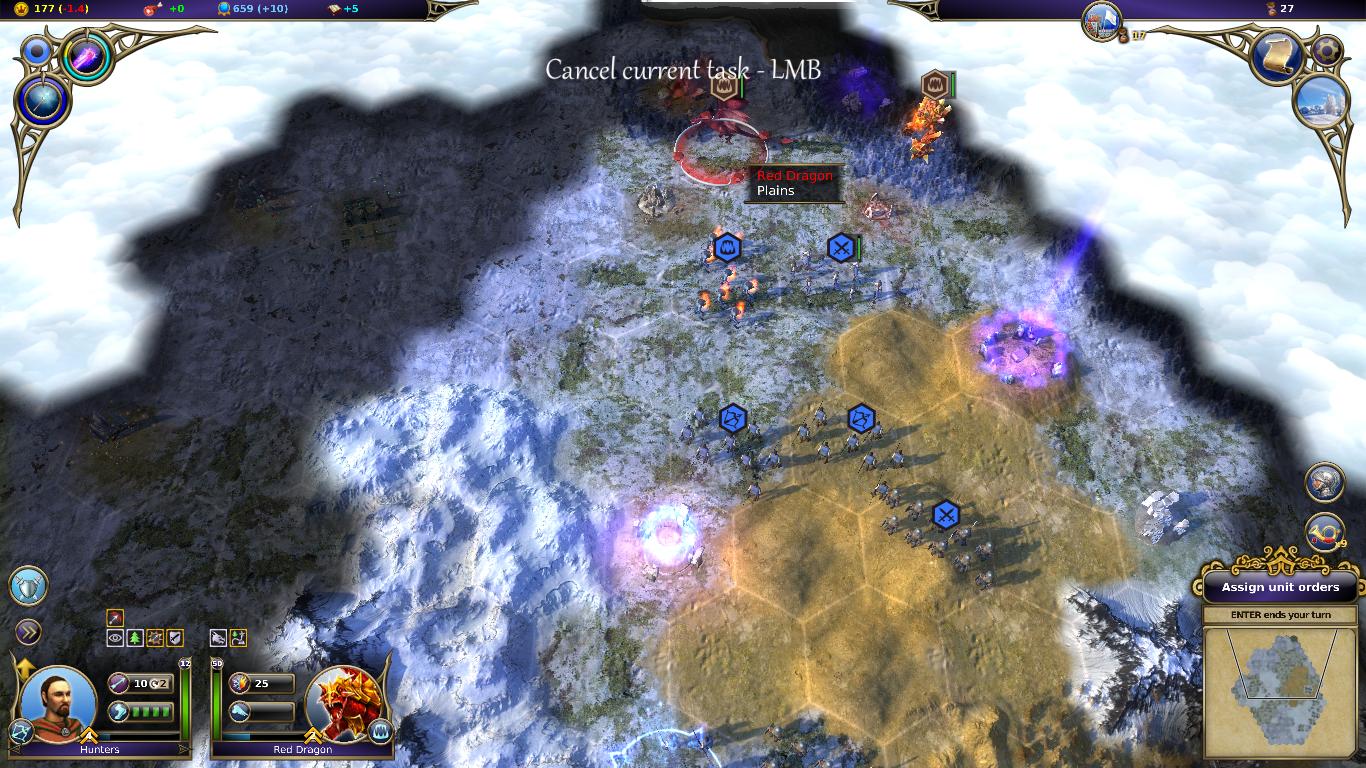
Warlock: Master of the Arcane is a new grand strategy game from those lovely people at Paradox Interactive.  And, as you can see from the screenshots, it bears more than a passing resemblance to Civilization V - is it just the same game with a different skin?  Or is there more to it than that?

Well, without spoiling the rest of the review, Warlock does share many, many characteristics with Civilization V (and most other 4X games.)  You control cities and armies, spending turns building up your empire and trying to defeat your opponents or working towards one of the victory conditions.  Warlock’s combat is also very similar to Civilization’s - with the controversial “one unit per tile” rule firmly in place and archers able to fire for about 5 miles without handicap.  In fact, as time and space are essentially finite, it’s probably better for me to tell you which bits of Warlock differ from the norm - so that you can decide whether you want to buy it.

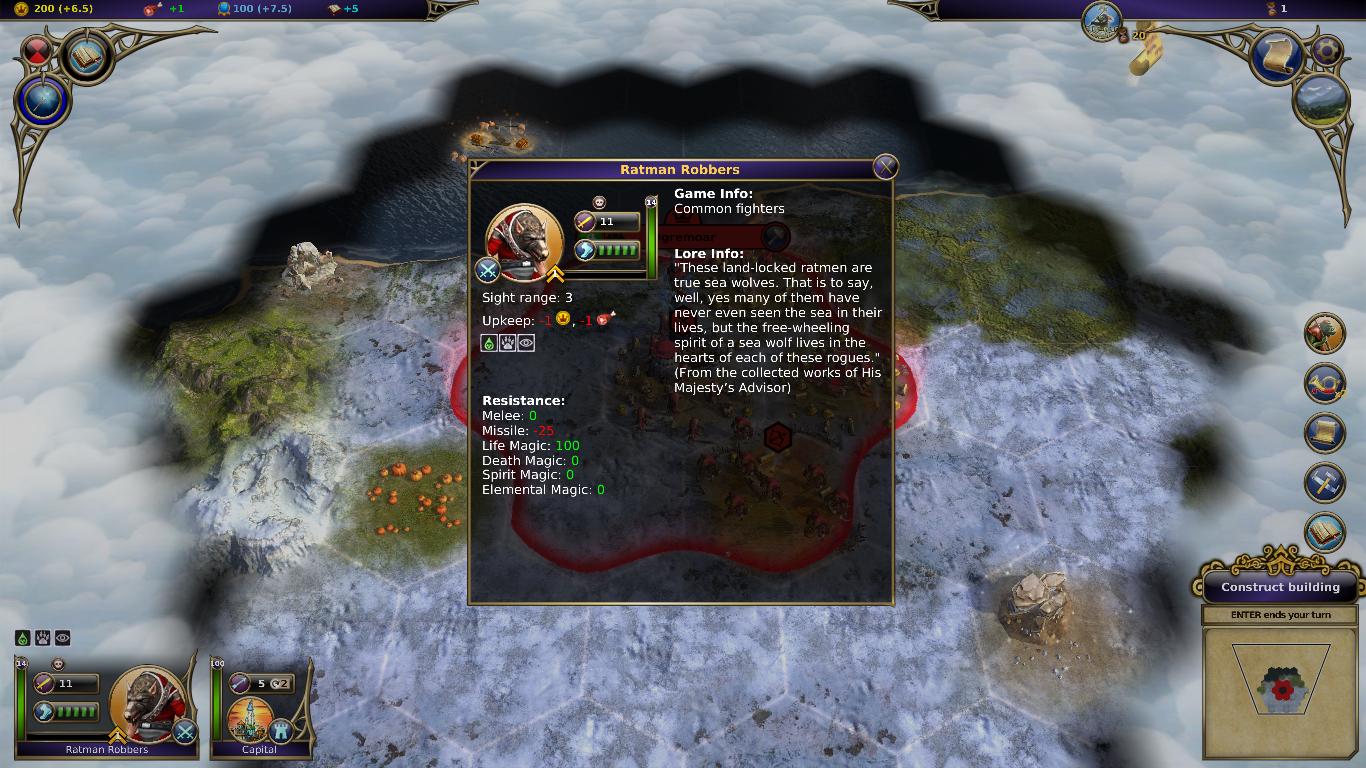
Ratmen.  More games need ratmen.

To start with, and pretty obviously with a name like Warlock: Master of the Arcane, this is a game with a fantasy setting.  You can play as one of three different races (humans, monsters or undead) - each with different buildings and different units.  One of the best bits about Warlock is the sheer number of potential troop types available to you.  From goblin archers to rogues, imps, ghost wolves, zombies, earth elementals, rats, strong rats and ratmen - the roster reads like a who’s who of every fantasy game of the past thirty years.  What’s more, as your minions fight they gain experience and you can pick perks to enhance their lethality (lethalness?).  There is something very exciting about creating and commanding your own fantasy army and letting it loose to lay waste to the surrounding countryside - and this provides one of the main reasons to play Warlock.  

This is certainly helped by the fact that the world that you live in (and lay waste to) is full to the brim with monsters.  You can’t move three hexes without bumping into the mangy little beggars.  This makes your surroundings much more of a living, breathing environment than would otherwise be the case.  The monsters are a source of experience for your troops, and their lairs provide loot for your budding kingdom - but they also make you feel like you are exploring, rather than just trying to work towards your victory goal. There is a real sense with this game that there are secrets and wonders hidden away behind the fog of war that surrounds you.  A good example of this are the sea monsters.  A Leviathan, or a sea serpent, will quickly kill your caravel or equivalent in a way that is reminiscent of old maps with “here be dragons” fearfully scrawled across them.  The world is full of dangers for your troops,especially at the beginning of the game, and this can lend some genuine tension to moving units before you have gained access to the more powerful armies.


Welcome to the new world, same as the old world

This sense of exploration is enhanced by another addition to Warlock - alternate planes.  There are portals on the world map which lead to locations in dimensions other than your own.  Your troops can go through these and explore these worlds, which often contain great perils and great rewards.  It’s a good idea, but unfortunately the execution leaves a lot to be desired.  The new dimensions don’t actually appear to be too different to your own.  They use the same tileset and the rewards are the standard gold or mana - there are just a lot of powerful monsters living there.  It would have been great if these worlds were truly different and your troops were transported to a hell, or a heaven - or something truly remarkable.  As it is, they provide a nice distraction and a challenge but it could have been so much more.

Another difference between Warlock and other strategy games is that, well, you are a warlock.  This may sound obvious but, as an archmage, you are able to research spells.  This takes the place of the more normal technology research that appears in (cough) other games and provides another strategic dimension to the goings on.  Spells can have many and varied effects - teleportation, summoning, buffs for your troops or the more direct fireball and its ilk which deal damage straight to your enemies.  These can often turn the tide of a battle, but beware because your enemies also possess them and will use them often and to great effect.

So this all sounds great - it’s a grand strategy game with a fantasy setting, alternate dimensions, loads of cool troops to command and some decent spells with which to destroy large portions of the countryside.  What’s not to love?  Well, unfortunately it’s not all rosy and  there are some problems that we probably need to talk about.

It might look like butter wouldn’t melt but she’s evil, EVIL I TELL YOU!

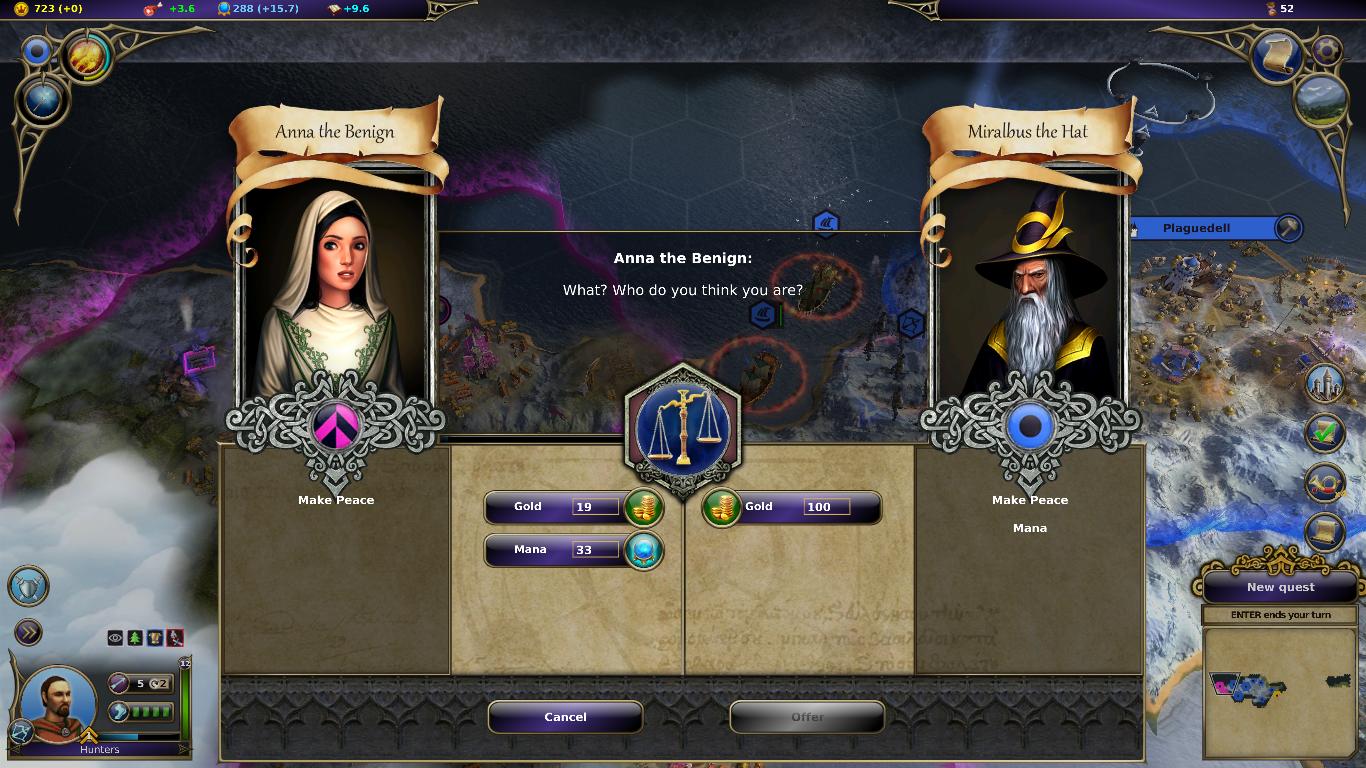
Let’s start with diplomacy.  It is present but it is very limited.  You can ally or trade with other mages, you can declare war or you can demand tribute and that’s about it.  If another mage contacts you to ask for gold or mana then the only options available are  “yes, take all my stuff” or “no, have at you sir, this is war”.  There are no subtleties, no negotiations, nothing except “yes” or “no”.  It’s all very basic, and this is a shame because it turns the other leaders, who actually look quite interesting and varied, into mere pictures because they all act the same.  For example, in a recent game I bumped into “Anna the Benign”.  I reasoned that she’d probably be a pacifist, especially as my leader was also a human good type.  Before long, however, she was gleefully breaking stereotypes, demanding gold and threatening war.  The leaders don’t seem to have any personalities of their own, they all give the same responses to the same situations as their peers.

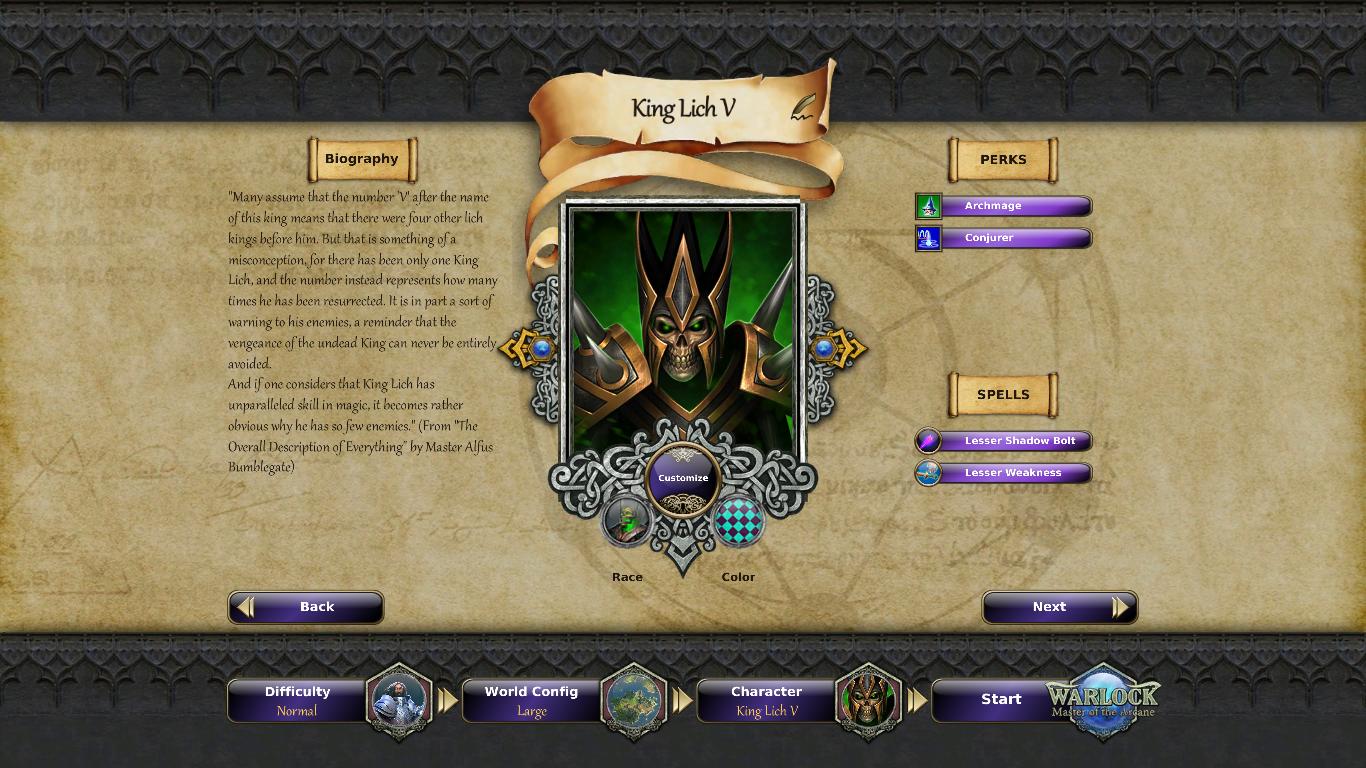
Another probem area is religion.  This is present in Warlock but it is, again, undefined and very basic.  There are eight gods in Ardania and your relationship with them varies according to whether you complete their quests or not.  If you annoy a god sufficiently he will send an avatar to smite you, and defeating this is one of the ways to win the game.  On the other hand, cultivate a decent working relationship with a god and you can access extra units and different spells.  This all sounds good, but there are no backgrounds to any of them.  They’re just names.  You can work out a bit about them from the spells they control but it would have been so much better to know who it is exactly that you’re worshipping.  If you’re playing the Lich King you don’t want to be following some namby pamby nature god, do you?


Hang on... you’re an ELF?!?

And both of these issues reflect a more general problem with Warlock.  It lacks polish.  For example when you have finished giving orders to a unit you have to press the “Assign Orders” button to move on to the next, the game doesn’t do that automatically.  You can feel sometimes that you are fighting the interface and it makes moving a large number of troops a real chore.  Similarly the spell research screen doesn’t seem to follow any system.  You would expect that all fire spells, or all healing spells, or all summon spells or however you want to classify them would follow on from each other but they don’t.  The selection appears to be completely random.  It means that you can’t follow a particular path for your mage, because you don’t know which path to follow or even if there is a path at all.

So where does this leave us?  It would be easy to dismiss Warlock as just a Civ V mod.  It isn’t, and I think that this is lazy and unfair.  It’s true that it does share a lot of similarities with its “inspiration” but it also introduces and uses a number of other really interesting ideas.  However, the main problem is that a lot of these ideas aren’t implemented fully, or with enough polish.  As it stands the game should be commended for creating a very good strategy / exploration mix, and allowing the player to assemble a motley fantasy army with which to wreak havoc - but it could have been so much more. It falls just short of greatness, and that is a real shame.